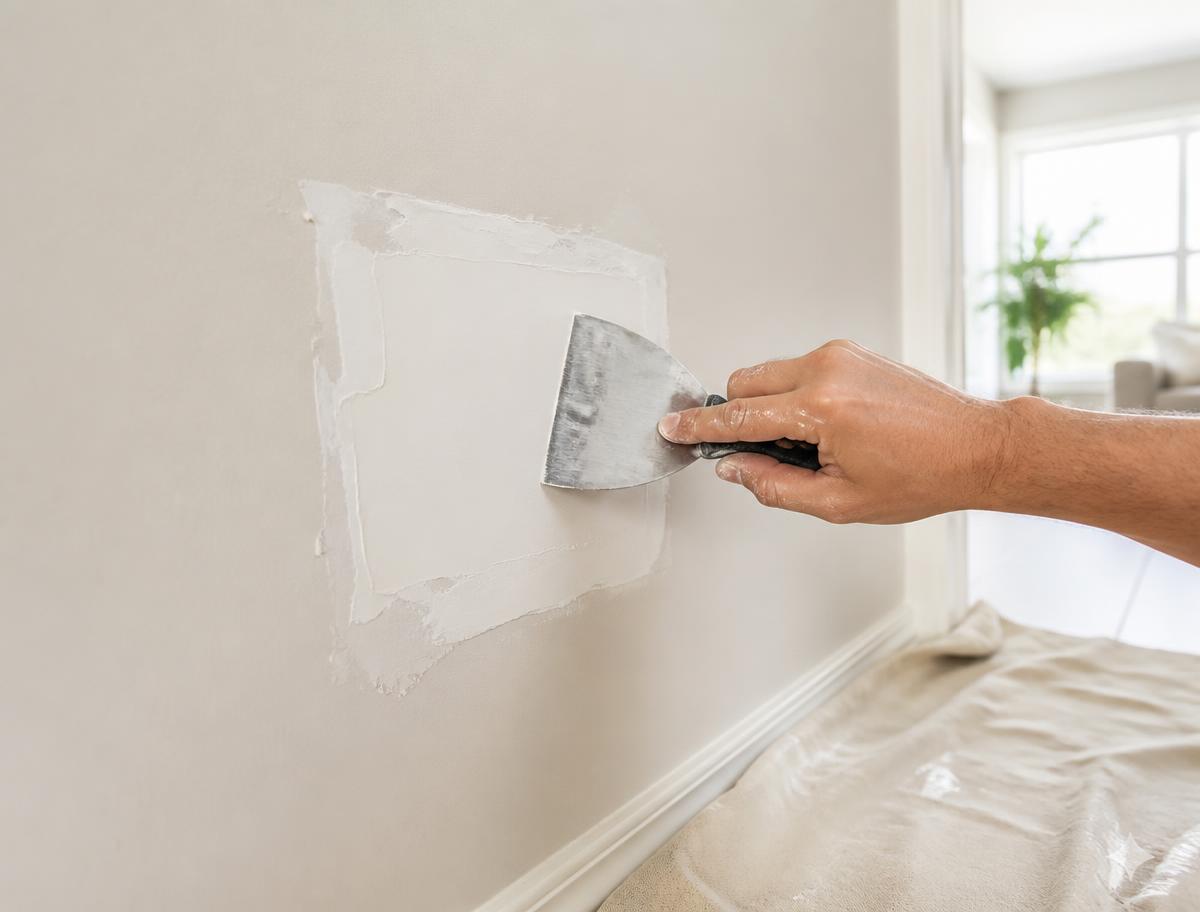
Damaged drywall is one of the most common calls we get from homeowners around Cary. Walls take a beating from furniture, door handles, removed shelving, plumbing repairs and everyday family life, and a single unpatched hole tends to make an otherwise well-kept room feel neglected.
Reliable Home Handyman repairs drywall on walls and ceilings, blends the patch into the surrounding surface, and finishes the area so the repair is not the first thing you notice when you walk in. Small patches are often a single visit, while larger sections that need multiple coats of compound are scheduled across return trips so each layer can dry properly.
Common Problems We Solve
- Doorknob holes, furniture dents and dings behind high-traffic corners
- Hairline cracks above doorways and windows where the framing has settled
- Ceiling stains and soft spots left behind after a roof or plumbing leak has been fixed
- Nail pops and seam lines that keep reappearing through the paint
- Open drywall left behind after an access panel, cabinet removal or wall-mounted TV came down
- Corner bead that has been cracked or crushed and no longer holds a clean edge
What the Work Includes
- Cutting back damaged material to solid, sound drywall
- Backing and bracing so the patch has something firm to fasten to
- Installing new drywall to match the existing thickness
- Taping, mudding and sanding in multiple coats
- Matching common textures including smooth, orange peel and knockdown
- Priming the repair and painting the area or full wall as requested
- Dust control with drop cloths and cleanup before we leave
How the Process Works
Step 1
Look at the damage first
We ask for a photo or take a look in person to understand how big the repair really is and whether anything behind the wall needs attention before it gets closed up.
Step 2
Give you a written estimate
You get a clear scope describing the repair, the finish level and whether painting is included, so there are no surprises once the work starts.
Step 3
Repair in coats
Compound is applied and sanded in stages. Rushing this step is the reason bad patches show through paint, so we let each layer set before the next one goes on.
Step 4
Finish and clean up
Texture is matched, the area is primed, and the workspace is vacuumed and wiped down before we call the job complete.
Recent Related Work
Typical Pricing
Cary-area planning prices for the most requested drywall repair line items. The “Typical around” amount is a planning average, not a guaranteed quote.
Small wall patch up to six inches
per patch
$250–$400
Typical around $325
Medium wall patch from six to twenty-four inches
per patch
$350–$600
Typical around $475
Ceiling patch up to approximately two feet by two feet
per patch
$550–$850
Typical around $700
Prime and paint the repaired wall add-on
add-on to a scheduled repair
$175–$350
Typical around $265
Selected services are combined into one estimated project total. Pricing and service disclosures.
Drywall Repair FAQs
Can you match the existing wall texture?
In most homes, yes. Smooth, orange peel and knockdown textures are all common in the Triangle and we blend the patch out into the surrounding wall so the transition is not obvious.
Do you paint the repair as well?
We can. Painting is quoted as part of the job, and we will tell you honestly when a repair is better served by repainting the full wall or the entire room rather than spot painting.
How many visits does drywall repair take?
Small patches are frequently handled in one visit. Larger repairs need drying time between coats of compound, so those are scheduled across more than one trip.
Do I need to fix the leak before you patch the ceiling?
Yes. Drywall placed over an active leak will fail again. We will let you know if the source of the moisture still needs to be addressed before the repair goes in.
Will there be dust everywhere?
Sanding does create dust, so we use drop cloths, contain the work area where we can, and clean up before we leave.