
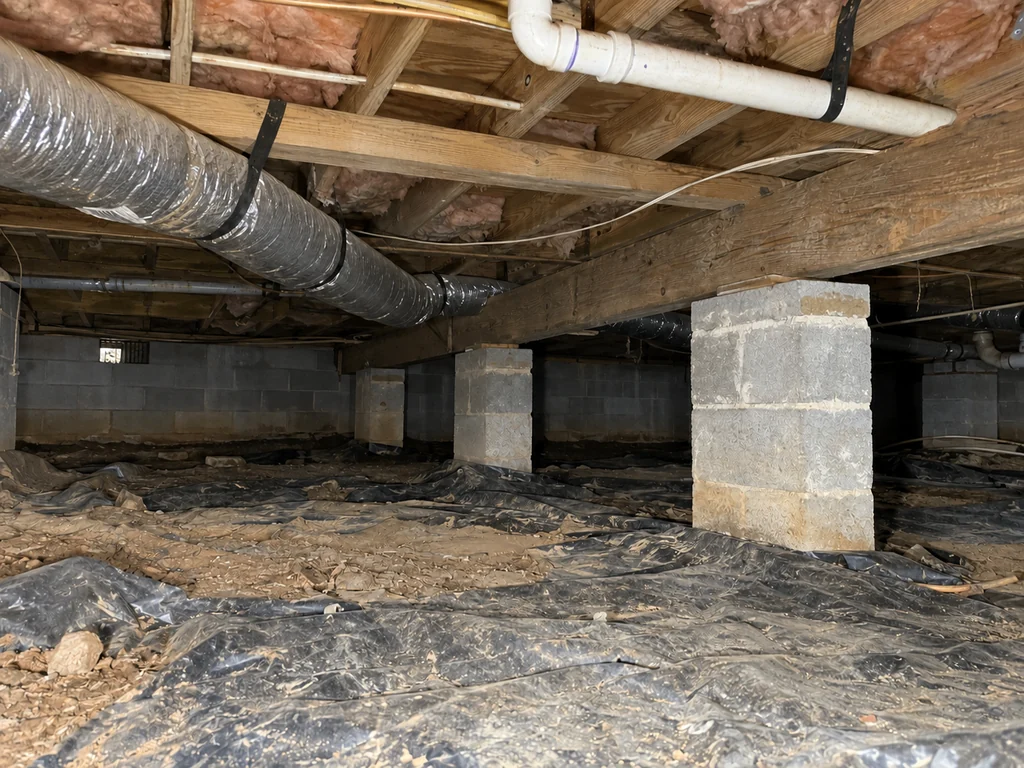
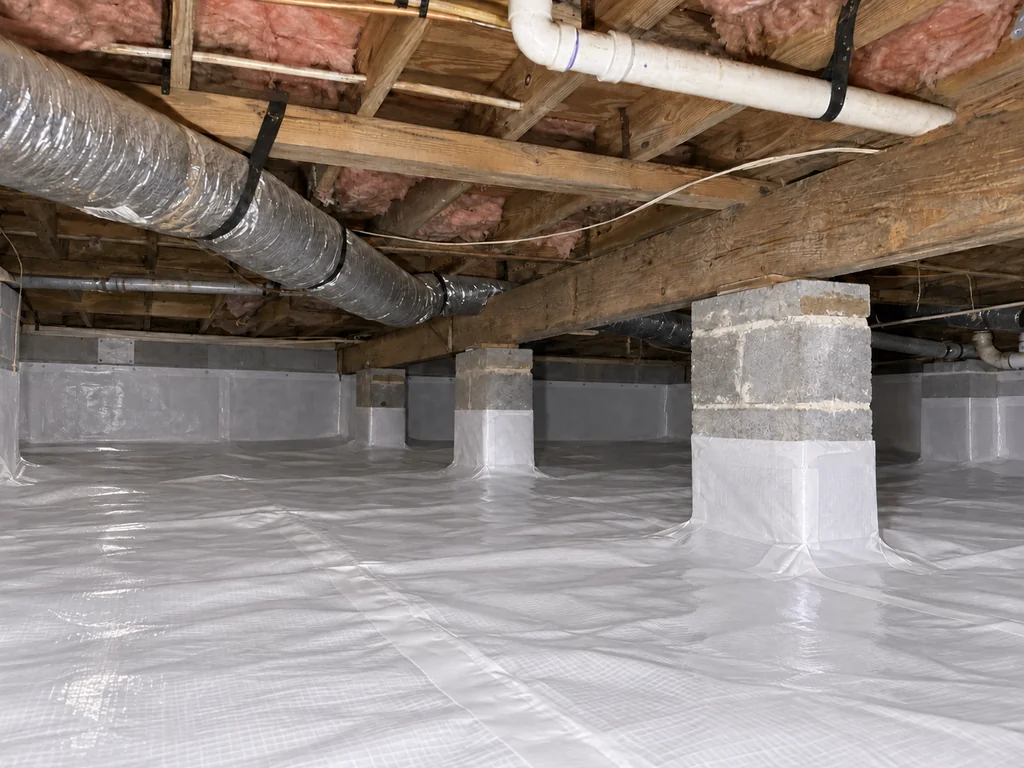
Crawlspace moisture control starts with the source
Crawlspace encapsulation separates exposed ground and foundation surfaces from the air beneath the home. A continuous liner helps limit ground moisture entering the space and leaves a cleaner covered surface. Reliable Home Handyman serves homeowners in Cary, Apex, Morrisville and nearby Raleigh.
Before lining begins, existing moisture sources, drainage and insulation condition need evaluation. Standing water, plumbing leaks, suspected mold or structural damage cannot be solved simply by covering them. We discuss what needs attention and identify work that requires an appropriate specialist.
Ground vapor barrier or fuller encapsulation?
Crawlspace vapor barrier installation covers the soil to help control moisture rising from the ground. A more complete crawl space encapsulation approach extends that coverage along foundation walls and around support piers, with overlaps, edges and penetrations sealed. These are different scopes, not interchangeable labels.
The right approach depends on access, the condition of the crawlspace and how moisture enters it. Insulation, drainage and dehumidification requirements are evaluated rather than assumed; every project does not need the same materials or equipment.
Signs your crawlspace needs attention
- Exposed soil or torn, displaced ground covering
- A persistent musty smell beneath or inside the home
- Damp, loose or deteriorated insulation
- Condensation or visibly damp surfaces
- Standing water or signs of recurring drainage problems
- Unsealed liner edges, seams or openings
What the work can include
- Remove debris and deteriorated ground covering so the area can be prepared for a new liner.
- Install a durable reinforced vapor barrier over the ground.
- Extend and seal the liner along foundation walls and around support piers.
- Seal overlaps, edges and penetrations to make the barrier continuous.
- Evaluate existing insulation and discuss recommended replacement where its condition warrants it.
Preparation, ground coverage, wall lining, pier wrapping and sealed seams are described in the written scope. We confirm what is included, what needs evaluation and what falls outside our work before installation begins.
Planning your crawlspace quote
Crawlspace size, clearance, access, old materials and required preparation affect the cost. Photos help us understand the space; an assessment may be needed to confirm the condition and final scope. Your written quote reflects the agreed work rather than a one-size-fits-all package.
Include your city or ZIP code, approximate dimensions if known, a view of the access opening, wide views beneath the home and close-ups of problem areas. Mention standing water, insulation concerns and any access restrictions. Do not enter an unsafe crawlspace to take photos.
Common crawlspace questions
What does crawlspace encapsulation cost?
The price depends on the crawlspace’s size, clearance and access, the condition of existing materials, and how much preparation and lining are needed. Send photos and your location; we’ll review the details, arrange an assessment when needed, and provide a written scope and price before work begins.
Does the insulation need to be replaced?
Not automatically. Existing insulation is evaluated for deterioration, dampness and how it fits the proposed moisture-control approach. Any recommended replacement is discussed and included in the scope only when agreed.
Will I need a dehumidifier?
Not every crawlspace needs the same equipment. Humidity, drainage and existing moisture sources need evaluation before dehumidification is recommended. Equipment or work outside our scope is identified separately; a liner alone is not a guarantee of humidity control.
What preparation is included?
Preparation can include removing debris and deteriorated ground covering before installing the liner. Standing water, active leaks, suspected mold or structural damage need attention from the appropriate specialist before they are covered. The final preparation scope depends on the condition we find.
What should I send for an estimate?
Send your city or ZIP code, wide views of the crawlspace, close-ups of damaged covering or damp areas, and a photo of the access opening. Include approximate size and clearance if known, whether there is standing water, and any concerns about insulation. Only take photos where it is safe to enter.
Other areas of your home need attention? Explore our handyman services and Triangle service areas. Service disclosures explain project limits.